

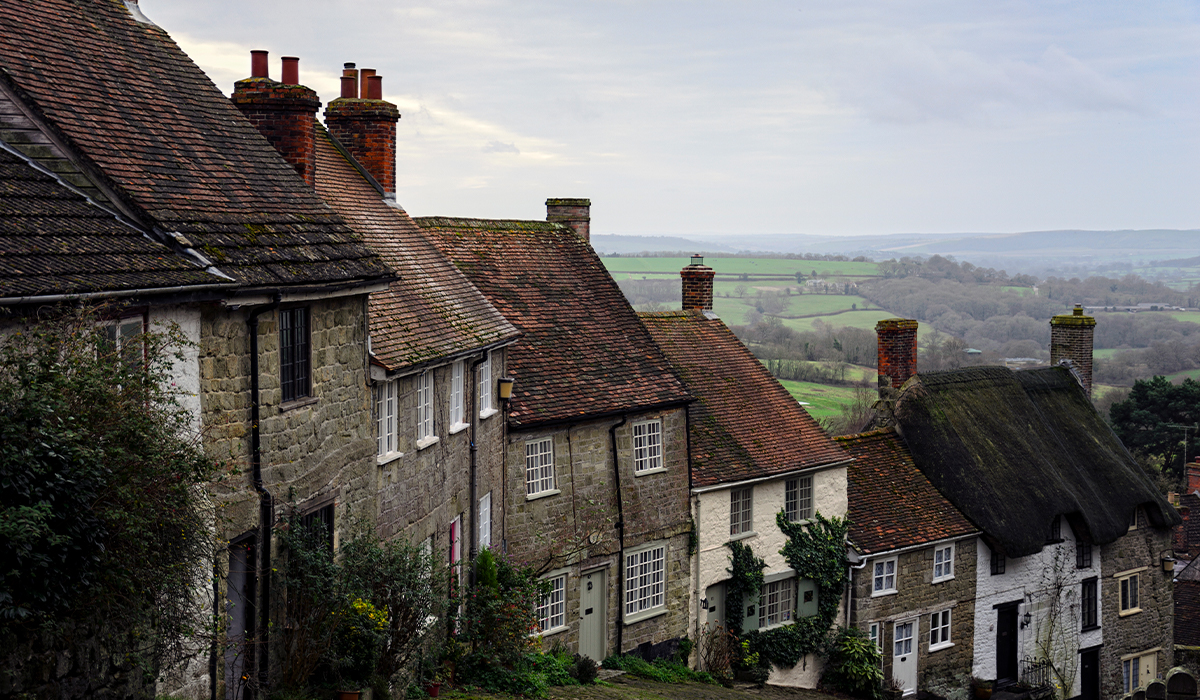
Stumbling into a village where nothing seems to have changed in a hundred years is magical in its own right. You don’t find any coffee chains or traffic jams, just cobbled lanes, thatched roofs, and maybe a lone dog wandering past a duck pond like it owns the place.
One can find a number of such places in England, tucked away down single-track roads that satnavs seem to actively avoid. Such destinations don’t feature on those “Top UK Destinations” listicles, which is exactly the reason why such places feel so wonderfully untouched.
Do you enjoy postcard England more than motorway service stations? Here’s a list of 10 villages that feel like they’ve slipped the crack in time.
1. Lacock, Wiltshire
The backdrop of Pride and Prejudice, Downtown Abbey, and even Harry Potter, Lacock is a perfectly preserved place in England. You won’t find those overhead cables or modern signage, as they’re not allowed in the historic centre. Wander on its stone streets and you’re genuinely going to feel like you’re stepping into the 18 th century.
Important Fact: Lacock Abbey next door is worth pairing with your visit. It's where the world's first photographic negative was created.
2. Castle Combe, Wiltshire
Counted among the prettiest villages in England, oftentimes, Castle Combe offers a cluster of honey-coloured cottages around a babbling brook. There’s barely any modern intrusion in sight. The village is small enough to explore in an hour, but so charming that you’ll want to linger over a packed lunch.
Important Fact: Come on a weekday morning if you can, as weekends draw a steady trickle of day-trippers.
3. Clovelly, Devon
Cars aren’t allowed at all at Clovelly. That’s enough to testify to the commitment of the village towards maintaining its old-world charm. You can only navigate the steep, cobbled main street on foot or even historically, by sledge (yes, really, for hauling goods). The working fishing harbour hasn’t lost its purpose in centuries, as the whitewashed cottages tumble down towards them.
Important Fact: Wear proper shoes. The cobbles are steep and can be slippery after rain. Shoes help you have the perfect visit here.
4. Bibury, Gloucestershire
Bibury, tucked in the Cotswolds, is best known for Arlington Row. A line of 17th-century weavers’ cottages, Arlington Row might just be the most photographed row of houses in all of England. Nevertheless, beyond this, the village has a charm and beauty of its own. The whole village moves at an unhurried, timeless pace along the River Coln.
Important Fact: Early morning light on Arlington Row is stunning, and you'll have the view mostly to yourself before the coach tours arrive.
5. Blanchland, Northumberland
Blanchland is built almost entirely from the stone of a 12th- century abbey. It feels less like a village and more like a place that quietly forgot to modernize. You will find one pub and one shop, but a subtle stillness settles over you, the moment you park your car in the village.
Important Fact: The surrounding North Pennines make for gorgeous, quiet walking country if you want to extend your visit.
6. Robin Hood's Bay, North Yorkshire
Clinging to a cliffside above the sea, you’ll find a tangle of red-roofed cottages at Robin Hood’s Bay. It has a smugglers’ history bakes into its very layout. The narrow alleys and hidden passages that make up this place were built deliberately to confuse excise officers. You’ll still feel like the place holds countless secrets, the moment you step in.
Important Fact: Fossil hunting on the beach at low tide is a genuine local pastime, not just a tourist gimmick.
7. Hutton-le-Hole, North Yorkshire
Hutton-le-Hole is scattered around open grazing land, with sheep wandering freely between the cottages. It is set within the North York Moors, and the cottages don’t feature fences and fuss. Amazingly, the biggest disruption to your day might be a flock crossing the streets in this village.
Important Fact: The Ryedale Folk Museum here is small but genuinely worth an hour of your time.
8. Chipping Campden, Gloucestershire
Even though it’s overlooked often in favour of its more famous Cotswold neighbours, Chipping Campden brags of a wonderfully unspoiled high street of golden stone buildings. Many of these structures date back to when it was a thriving medieval wool town. The village is grand, without ever feeling touristy at all.
Important Fact: The Cotswold Way footpath starts right here, if you fancy turning your visit into a proper countryside walk.
9. Elterwater, Cumbria
Elterwater, a tiny slate-built village, nestled in the Lake District, somehow escapes the crowds that pour into the nearby Ambleside and Grasmere. Sitting beside its namesake lake, this mesmerizing village is surrounded by fells, and offers a slow pace that feels increasingly rare in the Lakes.
Important Fact: The walk from here to Chapel Stile and back is a lovely, low-effort way to take in the scenery.
10. Alnmouth, Northumberland
A cluster of pastel-colored Georgian houses overlooking the River Aln as it meets the sea, Alnmouth has a quiet, almost forgotten charm to it. It once thrived as a busy grain port, but a shifting river course centuries ago left it as the sleepy, picturesque village it is today.
Important Fact: Visit at sunset, the light over the estuary here is something special.
11. Cotehele, Cornwall
Less a village and more a whole medieval estate frozen mid-story, Cotehele sits above the River Tamar with a Tudor manor house, working watermill, and cottages that haven't strayed far from their 15th-century roots. The whole place feels quietly untouched by the last few centuries.
Important Fact: The National Trust runs the estate, and the quay below is a lovely, little-visited spot for a riverside walk.
12. Dunster, Somerset
Sitting in the shadow of its own medieval castle, Dunster has a genuinely unbroken high street of timber-framed and thatched buildings, plus a working 17th-century mill still grinding away. It's the sort of place where the yarn market cross and the packhorse bridge have simply always been there.
Important Fact: Dunster Castle is worth the climb up for the views over Exmoor and out to the Bristol Channel.
Time Moves Differently Here
What ties all these villages together isn't just their age, plenty of English villages are old. It's that they've somehow resisted the pull toward sameness that's flattened so much of modern life. No identical high streets, no rush, just stone, water, and time doing its own slow thing.
If you've ever wanted proof that England still holds onto its quieter corners, these ten villages are a pretty good place to start looking.